SP-Arte 2026
SP-Arte celebrates its 22nd edition with strong attendance and sales, and the consolidation of the design sector
The art and design fair welcomed 35,000 visitors, recorded significant sales, and confirmed the design section—now in its tenth year at the fair—as one of the event’s main drivers of growth.
Photos: https://www.flickr.com/photos/sp-arte/albums/
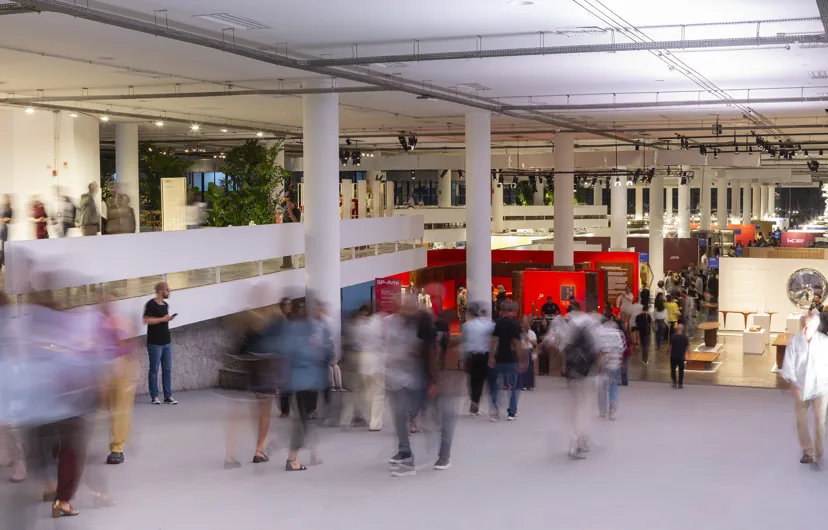
April 2026 — The 22nd edition of SP-Arte, which closed last Sunday, April 12, recorded 35,000 visits, confirming the growing public interest in contemporary art and design. The fair brought together 180 exhibitors, including national and international galleries, design studios, publishers, cultural institutions, and independent spaces. Gallerists reported consistent sales and ongoing negotiations, reflecting an active business environment throughout the week.
Over the five days of the event, collectors, curators, artists, designers, architects, and industry professionals circulated through the fair, reinforcing SP-Arte’s role as one of the leading platforms for meetings and business in the Latin American art circuit. Among the aspects most highlighted by exhibitors were the high quality of the works presented, the strong profile of buyers—with a significant presence of new collectors, many of them young, informed, and attentive to contemporary production—and the perception of renewal in the circuit, with emerging artists, designers, and galleries exhibiting at the fair.
This edition was also marked by growth and diversification among partner brands, particularly companies linked to the architecture, design, and real estate sectors. This movement directly aligns with the ten-year milestone of the design sector at SP-Arte, which over the past decade has consolidated itself as one of the event’s main axes of expansion, strengthening the dialogue between authorial creation, industry, and the market, and expanding connections between art, design, and other areas of the creative economy.
The next edition of SP-Arte is already scheduled to take place from April 7 to 11, 2027. Still this year, the calendar also includes the fifth edition of SP-Arte Rotas, from August 26 to 30, 2026, at Arca, in Vila Leopoldina, São Paulo.
International Guests
The 22nd edition of SP-Arte featured a strong international presence, bringing together around 100 foreign guests, including museum directors, collectors, curators, and art advisors. The list included representatives from South America, Europe, the United States, and Oceania, with prominent names from the global circuit.
Highlights included Brinda Kumar, Associate Curator of Modern and Contemporary Art at the Metropolitan Museum of Art, who visited Brazil for the first time. Will Palley, Vice Chair of the Young Patrons of the Museum of Modern Art and member of the Contemporary Council of the Solomon R. Guggenheim Museum, also attended, returning to the fair after his participation in 2025.
The program also featured Mari Carmen Ramírez (Museum of Fine Arts Houston), Jennifer Inacio (Pérez Art Museum Miami), and Robert Braun, director of the Museum of Latin American Art (MOLAA) in Los Angeles. The event also hosted international patrons and groups invited through official initiatives such as Latitude/ABACT and SP Negócios, reinforcing the fair’s global vocation and its role as a platform connecting the Brazilian market with the international circuit.
Awards
During the 22nd edition of SP-Arte, winners of four awards dedicated to recognizing contemporary artistic and design production were announced.
Sauer presented the Sauer Art Prize, which recognizes promising contemporary artists. This year’s winner was Gabriel Branco, a visual artist born in São Mateus, in São Paulo’s eastern zone, represented by Galatea. Moving between analog photography and painting, his work is rooted in peripheral urban experience and subjective dimensions of everyday life.
In its second edition, the Arauco SP-Arte Award for Innovation and Sustainability was granted to designer Érico Gondim, a participant in the Design NOW sector. Focused on circular economy practices, Gondim presented a line of authorial furniture developed from discarded pipes and fittings from urban infrastructure. As part of the award, he received a trip to the Interzum fair in Germany in 2027, as well as a dedicated space in the next edition of SP-Arte.
Also in its second edition, the Artefacto Best in Design Award recognized Estúdio Prosa—founded by Júlia Rovigo and Gabriel Pesca—for work that bridges craftsmanship and contemporary language, marking the debut of the Itajaí-based exhibitors at the event.
The MECA SP-Arte ABACT 2026 Award, presented at SP-Arte for the first time, was granted to artist Rafael Chavez, represented by Casa Triângulo. Self-taught and originally from the caatinga region in the hinterlands of Paraíba, the artist develops a practice that explores intersections between body, landscape, spirituality, and territory, establishing herself as a standout name in the contemporary scene.
Sales
Strong commercial results were reported by several galleries. DAN Galeria recorded significant sales, including works by Di Cavalcanti, Tarsila do Amaral, Leon Ferrari, Volpi, Denise Milan, Senk, Teodoro Dias, and others, with additional negotiations ongoing.
Danielian highlighted solid performance across both contemporary and historical artists, with sales of works by Ana Neves, Álvaro Seixas, Ottavia Delfanti, as well as Guignard, Cícero Dias, and Lygia Pape.
Mitre evaluated its participation positively, even while simultaneously exhibiting at Expo Chicago. Sales included works by Wallace Pato, Luana Vitra, Ayla de Oliveira, Davi de Jesus do Nascimento, and Manauara Clandestina, with prices ranging from $5,000 to $30,000.
Paulo Kuczynski reported high-value transactions between R$1 million and R$2 million, including works by Eleonore Koch, Guignard, Di Cavalcanti, and Volpi.
Raquel Arnaud also reported consistent sales across a wide range of artists, with prices between R$20,000 and R$600,000.
Fortes D’Aloia & Gabriel celebrated its strongest participation to date, with sales across all represented artists, including to new collectors met during the fair.
Zipper Galeria reported a sell-out of works by Janaína Mello Landini, priced between R$140,000 and R$220,000.
Galatea achieved strong sales of both modern and contemporary artists, including Rubem Valentim, Antônio Dias, Ivan Serpa, and Allan Weber, with works reaching up to R$1.5 million.
Other galleries—including Leonardo Leal (Fortaleza), Cave, Darzé (Salvador), and Lima (São Luís)—also reported strong results, increased revenue, and ongoing negotiations.
International galleries such as Piero Atchugarry Gallery (Uruguay), Pasto Galería (Argentina), and Emmanuelle G Contemporary (New York) emphasized strong interest, new contacts, and positive post-fair prospects.
Design
One of the edition’s key highlights was the consolidation of the design sector, which gained even greater prominence as it celebrated ten years at the fair. Increased participation and diversity of proposals demonstrated the segment’s maturity and the growing interest of collectors in pieces that move between functional and sculptural.
The sector celebrated its 10th edition with a new area dedicated to furniture and its creators, Design NOW, located on the third floor of the Bienal Pavilion. Featuring ten studios—nine of them first-time exhibitors—the space presented a snapshot of Brazil’s independent design scene. Curated by Livia Debbane, the section highlighted a production model tied to the rise of authorial design in Brazil.
Exhibitors emphasized the fair’s impact as a platform for visibility and business. First-time participant Jay Boggo described a transformative experience, while Estúdio Sette7 highlighted expanded networking opportunities.
Itens, celebrating ten years—nine of them at the fair—reinforced SP-Arte’s strategic importance as a platform for positioning and relationship-building beyond sales.
Estúdio Prosa exceeded expectations, gaining recognition, new clients, partnerships, and press visibility, in addition to winning the Artefacto Best in Design Award.
Designer Lucas Recchia reported his studio’s best results to date, with first-day sales surpassing the entirety of the previous year’s participation, reflecting a more mature collector perspective toward design as art.
Érico Gondim, winner of the Arauco Award, highlighted the visibility gained and the importance of sustainability-focused design, emphasizing the relevance of networking and aligned partnerships.
Donations
The 22nd edition of SP-Arte was also marked by significant institutional donations, contributing to the expansion of public collections. The Pinacoteca de São Paulo received eight works, including donations from Iguatemi, collectors, and galleries such as Central, Estação, Nara Roesler, A Gentil Carioca, and Portas Vilaseca.
The Museu Nacional de Belas Artes incorporated an early 20th-century oil painting by Anita Malfatti into its collection, donated by a private collector. These initiatives reinforced the fair’s role as a connector between the market, collectors, and institutions, promoting the inclusion of important works in public heritage collections.
—
Press information
Cor Comunicação
Carol Amoedo | +55 11 9 5122-5302 | carolinaamoedo@corcomunica.com.br
Mariana Ribeiro | +55 11 9 9328-1101 | marianaribeiro@corcomunica.com.br
Neila Carvalho | +55 11 9 9916-5094 | neilacarvalho@corcomunica.com.br
