SP-Arte Rotas 2026
SP-Arte Rotas 2026 celebrates positive results above expectations amid a challenging market
The fair brought together 78 exhibitors, with artworks sold by 95% of participating galleries
Images available at: Flickr SP-Arte
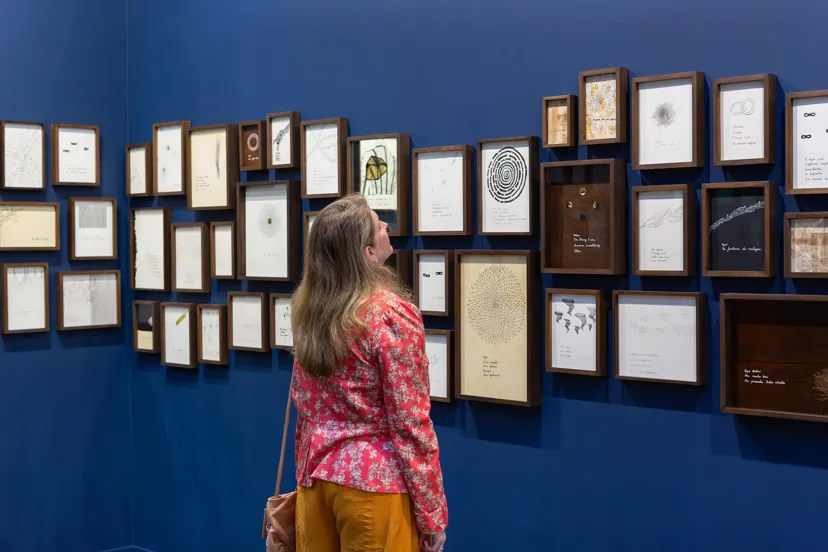
SP-Arte Rotas concluded its fifth edition with a strong presence of engaged and qualified buyers. Held from August 26 to 30 at ARCA in São Paulo, the fair brought together 78 exhibitors, including galleries, invited projects, and museums, with sales recorded by the vast majority of participating galleries. The results reinforce Rotas’ role as a space for developing new audiences for the art market and as a platform for the circulation of artists, ideas, and artworks.
The fair also strengthened its international presence this year. Participating galleries included Barro, Isla Flotante, and W—galería from Argentina; Galería Sur from Uruguay; Casa Zirio from Colombia; and Orma from Italy, in partnership with Brazilian gallery MaPa. The expansion of dialogue with Latin America was also reflected in Mirante, a section curated by artistic director Bernardo Mosqueira.
Galleries highlight sales and new collectors
Commercial results were recorded across a range of price points and, in several cases, were accompanied by negotiations that continued after the fair closed. For exhibitors, Rotas also served as a platform for connecting with both established collectors and new buyers, as well as curators and institutions.
Lima reported positive results on both fronts. In addition to connecting with curators and institutional collectors, the gallery recorded purchases by returning collectors as well as people acquiring artworks for the first time. All six works by Gabriel Arcanjo presented at the fair were sold, along with an additional work; Lysmark Lial sold four of the seven works on view, with a fifth under negotiation. Works by Thiago Martins de Melo, Bárbara Savannah, and Gabriel Lopes were also sold.
“For a fair like Rotas, it is very important for a gallery to arrive with a well-defined project, grounded in consistent research, while also being able to engage different audiences. We need to speak both to those who already collect and have a more experienced eye, and to those who are just beginning to build a collection. Rotas has this ability to bring new audiences closer to art and the art market, and that is very important to us,” says Marco Antonio Lima of Lima Galeria.
At Paulo Darzé, a presentation of small-format works brought together emerging artists and established names such as Nádia Taquary, Ayrson Heráclito, Emanoel Araújo, Antonio Dias, and Almandrade. According to Thais Darzé, the greatest interest was concentrated precisely on the younger artists. “Collectors are looking at things differently: they want to discover young artists, new work, and work at a different price point. It is also an opportunity to develop audiences and attract new collectors.” By the end of the fair, the gallery had closed 54 sales.
Claraboia also reported strong results, selling more than 40 works in its first presentation of its new group of represented artists. Rafael Kamada and Hugo Sá achieved sold-out presentations. “These were two artists we strategically wanted to introduce to the public, and we managed to do so in a consistent way. The feedback and the results were very interesting,” said Nathália Lima, the gallery’s director.
Almeida & Dale reported exceeding expectations while maintaining negotiations in progress after the fair. “We surpassed the targets we had set and left very satisfied. Beyond the sales made during the event, it was important to establish new connections and deepen conversations with collectors that are still ongoing. We are very confident about the post-fair sales and believe that an important part of the results will still materialize over the coming weeks,” says Antonio Almeida, the gallery’s director.
Among first-time exhibitors, Gruta highlighted its commercial performance from the opening hours of the fair. A 2 x 2-meter work by Junia Penido sold for BRL 55,000, followed by two additional works by the artist. The gallery also sold three works by Alberto Lamback, seven by Gabriela Stragliotto, three by Paulo Agi, and a sculpture by Gianfranco Briceño, the highest-value work presented at the booth.
Lume reported sales of approximately BRL 200,000, with Clara Moreira leading in volume and Florian Raiss in value. All of Clara’s drawings were sold. At its second booth, presented in partnership with Silvia Cintra + Box4 and dedicated entirely to artist Nazareno, sales reached approximately BRL 400,000.
At Argentina’s Isla Flotante, which presented a solo project by Tobias Dirty, winner of the 2nd Meca SP-Arte Prize, nearly half of the works on view were sold, particularly medium-sized works, totaling approximately BRL 70,000. Galatea sold eight works by Romildo Rocha and more than 50 candles by Zé di Cabeça, in addition to other pieces from the exhibition project.
Novos Para Nós, which has participated since the first edition, sold approximately one-third of the works presented and assessed the event positively. “One word defines the whole experience: courage — from the organization as a whole and from each exhibitor. The format is ideal for moving around and understanding the projects,” said Renan Quevedo, the gallery’s director.
Invited project Casa do Povo sold a group of 38 paintings created by Maxakali artists to Instituto Paz, as well as two works to REC Cultural, a cultural center scheduled to open at Marco Zero, in Recife Antigo, Pernambuco. Several collectors expressed interest in acquiring additional works, which are currently being negotiated by Casa do Povo together with Aldeia-Escola-Floresta.
“For the Maxakali, the goal is about much more than selling artworks. First and foremost, it is about making their culture known in the non-Indigenous world and raising resources for their territory,” says Benjamin Seroussi, director of Casa do Povo.
Another successful invited project was Ocupá, a space founded by Jonathan Gomes that seeks to build bridges between Rio de Janeiro’s South Zone and artists from peripheral territories across the city. In total, 31 works were sold.
Program
The Palco SP-Arte hosted conversations between artists, curators, collectors, and other art-world professionals from August 27 to 29. Developed by Tamara Perlman and open to all visitors, the program featured figures including Ayrson Heráclito, Carmela Gross, and Júlia Rebouças, bringing together discussions on artistic production, the art market, circulation, and contemporary cultural issues. The program also featured a special appearance by Maribel López, director of the ARCO Madrid art fair, who will take over as director of the Fundació Miró in Barcelona in October 2026.
“SP-Arte really captivated me. The idea of examining such a rich scene — or such rich scenes — as those of Brazil, which in itself is a continental scene, with so many nuances, differences, and ways of approaching artistic creation, is very interesting. I think this is very important because it also offers the possibility of delving deeper into content and sharing it in a very, very open way with guests, visitors, and collectors,” said Maribel López.
For curator Eungie Joo: “It seems to be an especially interesting moment for artistic production in Brazil and for the ways in which it is being contextualized. With the emergence of new voices in our field, and the fruits of years of work by our colleagues gaining visibility in major exhibitions across the country, our understanding of the interconnected histories of visual art, material culture, and spiritual practices is being reshaped. This is a meaningful moment to look again — and again — at all of this.”
According to Jennifer Inácio of the Pérez Art Museum Miami, one of Rotas’ greatest strengths lies in the plurality of languages, histories, and perspectives that shape Brazilian artistic production today. “In this edition, it was particularly special to revisit works by Adriana Varejão at Flexa, works by Antonio Henrique Amaral presented by Bernardo Mosqueira in the Mirante section, and to discover the work of Romildo Rocha, presented by Galatea, which draws on references from Maranhão’s culture. I was also captivated by drawings by Tobias Dirty, presented by Isla Flotante, a gallery originally from Argentina. I also appreciate how the fair broadens its perspective beyond Brazil, with the presence of Latin American galleries, reinforcing our cultural affinities and our connection to the region’s artistic production and market. In an increasingly globalized and, at times, homogenized international art circuit, I think it is very important to have a fair that values these dialogues.”
Mirante and Artistic Direction
In his first edition as artistic director of SP-Arte Rotas, Bernardo Mosqueira curated Mirante around the idea of an expanded landscape. Located at the center of the fair, the section brought together works in which memory, ecology, spirituality, politics, history, and imagination intersected, proposing different ways of thinking about the relationships between human beings, territories, and forms of life across Latin America.
The works presented in Mirante also achieved strong commercial results, with all paintings by Italian-Argentine artist Alfredo Spampinato sold, as well as a painting by Amadeo Lorenzato, one by Eleonore Koch, and works by Thiago Martins de Melo.
High-resolution images: SP-Arte Rotas 2026 — Flickr
Press Information
Cor Comunicação
Fernando Sant'Ana | fernando@fernandosantana.com.br | +55 11 99951-0456
Carolina Amoedo | carolinaamoedo@corcomunica.com.br | +55 11 95122-5302
Neila Carvalho | neila@corcomunica.com.br | +55 11 99916-5094
