Art as a collective endeavor

Beatriz Almeida
Aug 13, 2026
Above: Members of Jatobá Nascente and Jatobá, 2026. © Jhony Aguiar/Courtesy of Sertão Negro


“I feel that I am not alone. My people are always with me,” says Sueli Maxakali, a leader of the Tikmũ'ũn people (better known as Maxakali). A filmmaker and artist, Sueli is one of the founders of Aldeia-Escola-Floresta, in the Mucuri Valley (Minas Gerais), where she lives.
The word “community” suggests a group that shares a territory, interests, values, or experiences. Communities are also spaces where knowledge circulates, memories are preserved, and new ideas emerge.
At SP-Arte Rotas, this concept takes concrete form through the presence of three additional invited projects, alongside Aldeia-Escola-Floresta, whose participation is presented in partnership with Casa do Povo: Galeria Ocupá, from Rio de Janeiro; Galeria Jaider Esbell de Arte Indígena Contemporânea, from Boa Vista, Roraima; and Sertão Negro, an art and culture institute in Goiânia, Goiás.

Photos at Aldeia-Escola-Floresta. © Paula Berbert

Work by Asmahen Jaloul. © Courtesy Galeria Ocupá
Dialogues at Galeria Ocupá
Founded by Jonathan Gomes, Galeria Ocupá grew out of his engagement with the visual arts and his desire to create a space open to different audiences. Jonathan began by selling works by artists from Rio de Janeiro’s peripheral communities and, based on this experience, created Ocupá, located in Gávea, in Rio’s South Zone.
The gallery focuses on peripheral artists while remaining open to other approaches. For Jonathan, dialogue between people from different backgrounds is positive for everyone. This idea of the gallery as a space for encounters is also reflected in its exhibition program. One exhibition, held in December 2025 and featuring small-format works, brought established artists such as Luiz Zerbini (Fortes D'Aloia & Gabriel) and Lenora de Barros (Gomide&Co), into dialogue with emerging and early-career artists such as Miguel Afa and Cela Luz.
Jonathan also runs Ocupá LAB, which focuses on youth education and fostering connections with cultural institutions and art galleries. For him, expanding access is essential: “Art transforms, saves lives.”
For the first time at Rotas, Ocupá presents "Geometria do afeto", a selection of works by seven women artists: Asmahen Jaloul, Beta Azevedo, Guilhermina Augusti, Iahra, Isa Campanelli, tayná uràz and Thaís Iroko.

Works by Iahra. © Courtesy Galeria Ocupá

Work by tayná uràz. © Courtesy Galeria Ocupá
The Legacy of Jaider Esbell
Galeria Jaider Esbell, founded in 2013 by Jaider Esbell himself (1979–2021), aims to bring visibility to contemporary Indigenous art through exhibitions, support for emerging talent, the creation of a collection, and the preservation and continued promotion of Esbell’s work.
For its debut at Rotas, the gallery presents works by two young Indigenous artists from Roraima: Kaiwino Wiz, of the Makuxi and Wapixana peoples, and Pedro Macuxi, from the Maturuca community, as well as works by Isaías Miliano, Bartô Macuxi, and Mário Flores Taurepang — whose works are featured in the group exhibition "Macunaíma é Duwid", currently on view at Pinacoteca de São Paulo.
“Strengthening and expanding contemporary Indigenous arts sums up the gallery’s central foundation,” says Lêda Martins, the institution’s project director. This is GJE’s first participation in a national art fair since Esbell’s death in 2021.

Mario Flores Taurepang, "Makunaima em pedaços", 2025. © Reproduction from the Pinacoteca de São Paulo’s Instagram

Work by Kaiwino Wiz. © Jorge Macedo/Courtesy Galeria Jaider Esbell
The Power of Maxakali Culture and Territory
At Aldeia-Escola-Floresta, a community established following the Maxakali people’s land reclamation in 2021, territory and knowledge are inseparable. “For us, the territory is a school. We learn by the river, inside the forest,” explains Sueli Maxakali, a leader of the Tikmũ'ũn people.
In the workshops, children, young people, teachers, and pajés paint and draw together. For the Maxakali, art is living memory and strengthens traditional knowledge passed down through generations. This work gave rise to Pukkutok, Filho da Abelha (Pukkutok, Son of the Bee), a series that will be presented at Rotas in partnership with Casa do Povo, in São Paulo, and curated by Jacopo Crivelli Visconti.
The paintings were created by artists and pajés based on songs and stories related to the 33 species of bees that once existed in the Mucuri Valley. Many disappeared with the destruction of the Atlantic Forest, but “in our songs, the bees have not disappeared,” says Sueli.

Sueli Maxakali in the workshop at Aldeia-Escola-Floresta. © Paula Berbert

Sueli Maxakali, "Pukkutok mãhã [Bee-Spirit Son eating a true baby bee]", 2025. © Laura Viana/Courtesy of Aldeia-Escola-Floresta and Casa do Povo
The Growth of Sertão Negro
In 2021, in Goiás, Sertão Negro was born from the desire of artist Dalton Paula (Cerrado and Martins&Montero) and researcher Ceiça Ferreira to build a school that could bring together different forms of knowledge. What began in Dalton’s studio grew into an institution organized around four pillars: art, education, agroecology, and territory. Previously calling itself an art studio and school, Sertão Negro now defines itself as an art and culture institute.
“It is a radical gesture of imagining worlds,” says Beatriz Lemos, the institution’s artistic director. This invention takes concrete form in the education of students, artist residencies, and interpersonal relationships. Today, the institute welcomes around 200 students and has 40 collaborators.
At SP-Arte Rotas, Sertão Negro presents Associação Jatobá Nascente, an initiative of the institute that brings together artists Lucélia Maciel, Genor Sales (Cerrado), Abraão Veloso (Cerrado), William Maia, Xica and Tor Teixeira (Cerrado), whose works will be available for purchase at the fair. All have developed their practices through their experience at Sertão Negro and propose a model of artistic emancipation based on collective autonomy, with shared studios, housing, education, and management.
After five years funded entirely by Dalton Paula, Sertão Negro is now seeking new forms of sustainability. For Beatriz, participating in art fairs is an opportunity to communicate the project’s potential and find resources to help it continue growing. “We are calling on society to help sustain this dream.” It is through this movement that community ceases to be merely a context and becomes a way of making things happen.

Members of Jatobá Nascente, 2026. © Jhony Aguiar/Courtesy of Sertão Negro

View of Jatobá Nascente, studio and residence, 2025. © Paulo Rezende/Courtesy of Sertão Negro
Beatriz Almeida holds a specialization in Museology, Collecting, and Curatorial Studies, with a research focus on accessible curatorship. She earned a bachelor's degree in Social Communication, completing a thesis on graffiti, activism, and advertising. She is a member of Rodrigo Naves’s art history study group. For the past seven years, she has worked in communications and design within the cultural sector, with experience at galleries, museums, and artists’ archives. She is currently a Communications Specialist at SP-Arte.
Author
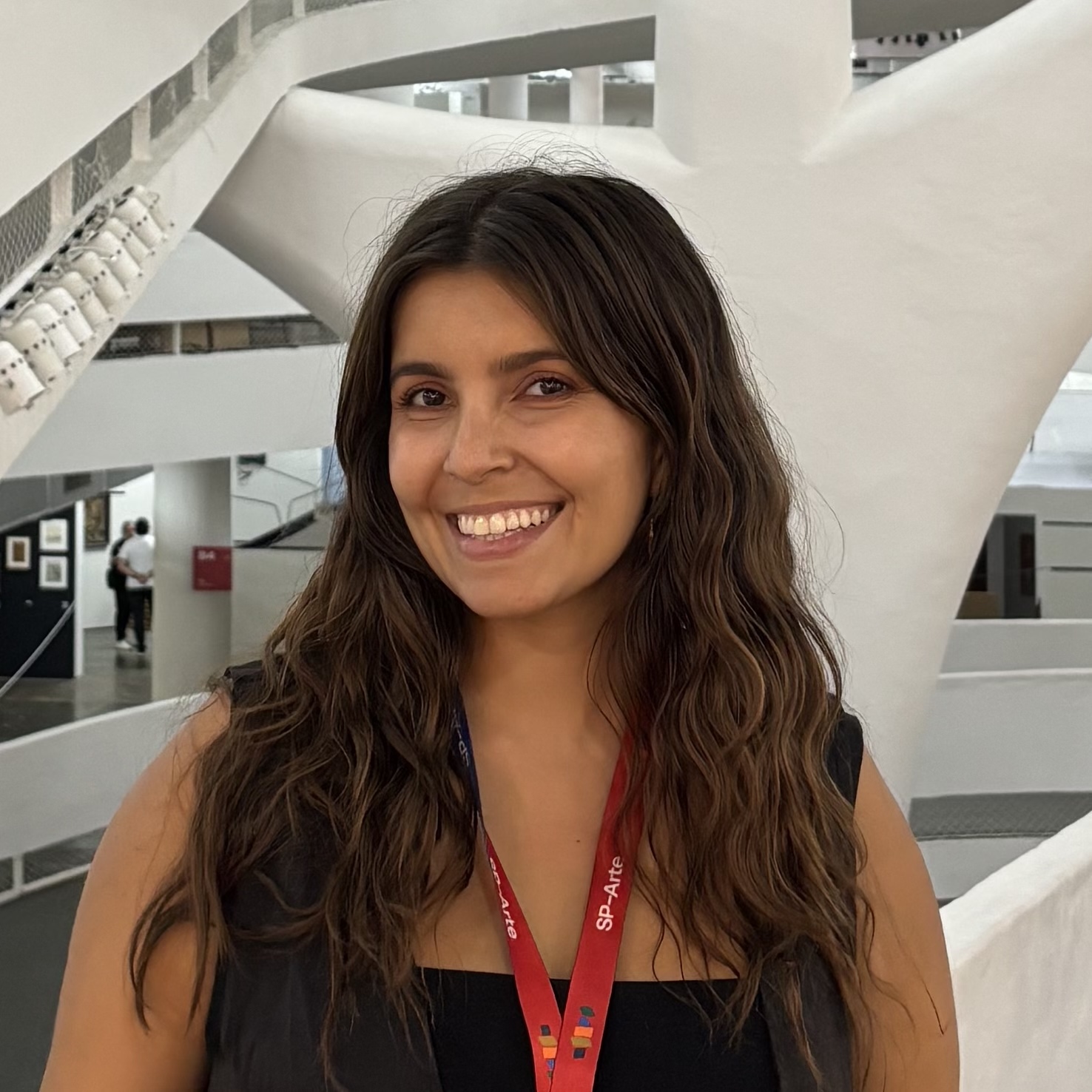
Beatriz Almeida
Beatriz Almeida holds a specialization in Museology, Collecting, and Curatorial Studies, with a research focus on accessible curatorship. She earned a bachelor's degree in Social Communication, completing a thesis on graffiti, activism, and advertising. She is a member of Rodrigo Naves’s art history study group. For the past seven years, she has worked in communications and design within the cultural sector, with experience at galleries, museums, and artists’ archives. She is currently a Communications Specialist at SP-Arte.
